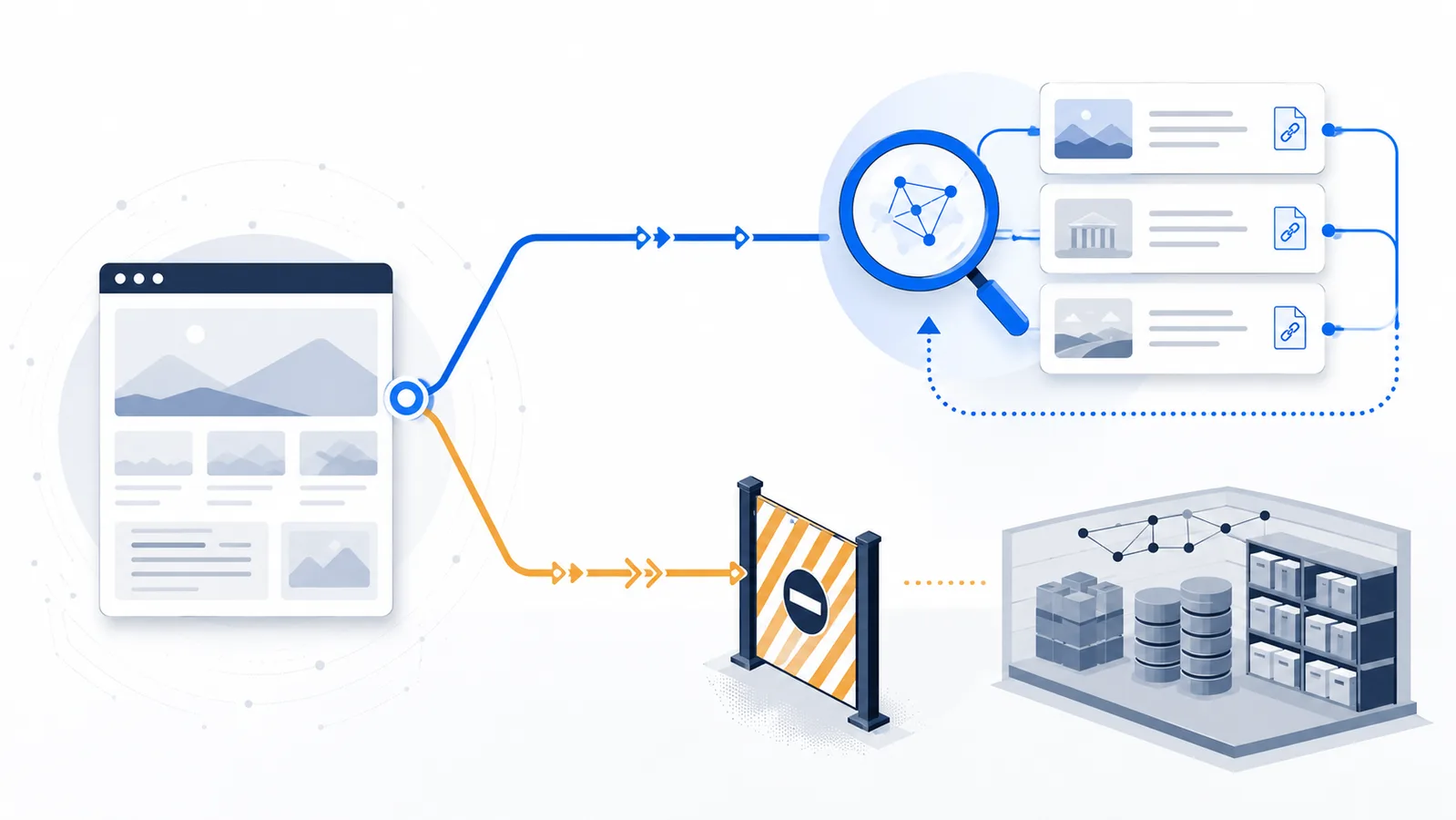
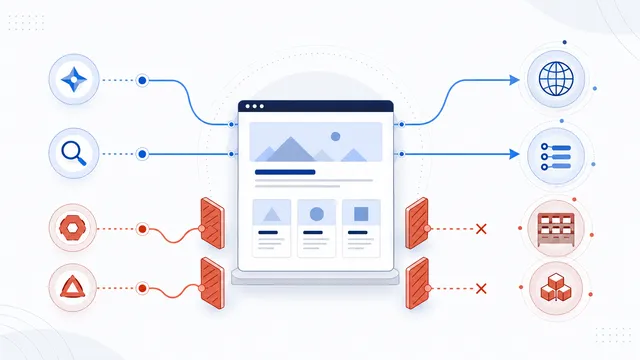
Use separate User-agent groups for each purpose: allow AI search crawlers such as OAI-SearchBot and Claude-SearchBot, while disallowing training-oriented crawlers such as GPTBot and ClaudeBot. These controls are independent, so do not block an entire provider when your goal is only to opt out of training.
Many publishers want their pages to remain discoverable in AI search while declining future use by model-training crawlers. That is possible only when a provider exposes separate crawler identities for those purposes. A company name by itself is not enough; the robots.txt file must address the published User-agent tokens.
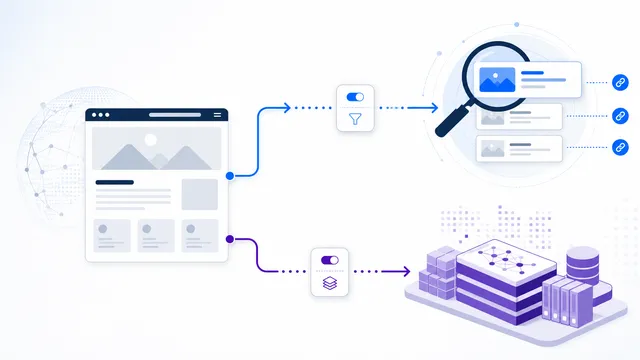
OpenAI documents GPTBot for content that may contribute to training its generative AI foundation models and OAI-SearchBot for surfacing sites in ChatGPT search. Anthropic documents ClaudeBot for model development and Claude-SearchBot for search-result quality. Each token needs its own group.
OpenAI configuration
The following policy asks OpenAI not to use future GPTBot crawling for training while allowing OAI-SearchBot to discover public pages for ChatGPT search:
OpenAI states that these settings are independent. A robots.txt change may take roughly 24 hours to be reflected by its search systems. Allowing OAI-SearchBot permits discovery; it does not guarantee that a page will be cited or shown for a particular query.
Anthropic configuration
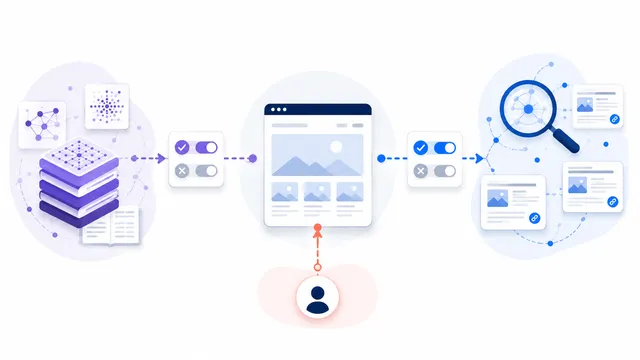
Anthropic also exposes separate training and search agents:
Blocking ClaudeBot signals that future site materials should be excluded from Anthropic’s model-training datasets. Blocking Claude-SearchBot is a different choice and may reduce the site’s visibility or accuracy in Claude search results.
Decide separately about user-request agents
ChatGPT-User and Claude-User are associated with requests initiated by an individual user. They are not the same as automatic search indexing or training crawling. OpenAI notes that robots.txt may not apply to ChatGPT-User in the same way because the action is user initiated; Anthropic provides Claude-User as a separate controllable agent. Review these tokens as their own policy decision rather than silently grouping them with training bots.
Keep Google and Bing search crawling open
Do not add User-agent: * with Disallow: / to implement this policy. That would also request that Googlebot, Bingbot, and other compliant crawlers stop fetching the site. If conventional search traffic matters, leave those agents open and use narrow groups only for the AI purposes you want to restrict.
Google-Extended is another separate control: it is a product token used to manage certain Gemini-related uses of content and is not a replacement for Googlebot. Review Google-Extended vs Googlebot before changing Google-related rules.
Publish, test, and monitor
Add the complete policy to the robots.txt file at the root of each applicable host.
Use the checker to confirm that training tokens match the block and search tokens match the allow rule.
Open several important public URLs through the test to ensure Googlebot and Bingbot remain allowed.
Review server logs and AI-search referrals after the change.
Revisit the policy when providers publish new tokens or change crawler roles.
For a reusable starting point, open the Allow Search, Block AI Training template. Treat it as a policy template, not as a permanent substitute for reviewing current provider documentation.
FAQ
Can I appear in ChatGPT search while blocking GPTBot?
Yes. OpenAI documents GPTBot and OAI-SearchBot as independent settings. Allow OAI-SearchBot and disallow GPTBot to express that policy.
Can I allow Claude search while blocking Claude training?
Yes. Use separate groups that disallow ClaudeBot and allow Claude-SearchBot. Anthropic describes these bots as serving different purposes.
Will allowing an AI search bot guarantee citations or traffic?
No. It permits discovery and indexing for the provider’s search features, but relevance, selection, citation and ranking remain the provider’s decisions.
Should the wildcard User-agent group block everything else?
Usually not. A wildcard full-site block can also affect conventional search crawlers and other useful services. Use exact crawler tokens for a selective policy.
Do Content-Signal directives replace crawler-specific groups?
No. Content Signals express preferences about post-access uses, while Allow and Disallow groups control access for crawlers that recognize them. Adoption differs, so the mechanisms can be complementary.
We use essential storage for security and core features. With your permission, we may also use analytics and advertising technologies. Rejecting optional technologies does not block access to the site.
Non-essential categories are off unless you choose to enable them. You can return to these settings at any time from the footer.
Global Privacy Control is active.Your browser has requested an opt-out from sale, sharing, and targeted advertising. Advertising remains disabled.
Strictly necessary
Supports security, server sessions, form protection, administrator sign-in, and remembering your privacy choice.
Analytics
Allows Google Analytics to measure visits and interactions so the site can be improved. It is not loaded before permission.
Advertising and cross-site measurement
Allows advertising technologies when they are configured. This may involve ad delivery, fraud prevention, measurement, personalization, or cross-context advertising.
Your choice is stored for 180 days using a first-party preference cookie. A material policy change can ask you to choose again.

 How to Block AI Crawlers with robots.txt
 GPTBot vs OAI-SearchBot: Training vs Search
 ClaudeBot vs Claude-SearchBot: Training vs Search
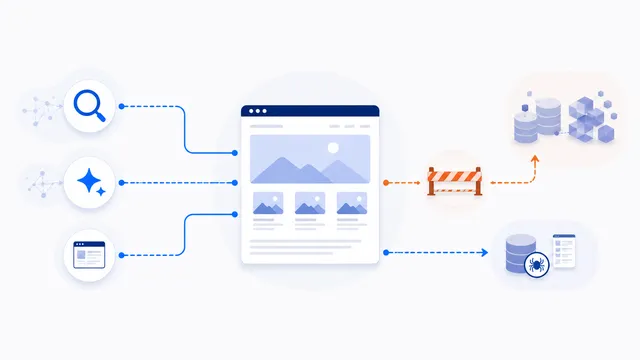 Allow Search, Block AI Training robots.txt Template
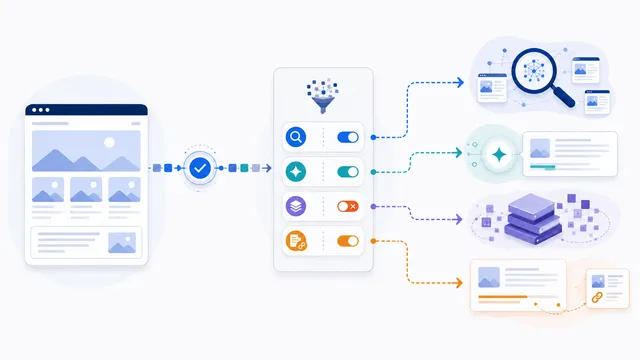 Content-Signal in robots.txt: Meaning and Examples